Within our operations, we generate hazardous wastes in connection with:
In all these cases, the waste is disposed of responsibly, in keeping with applicable SEMARNAT laws.
During handling of materials, containers or packages may be breached or broken, product may be non-compliant or other emergencies may arise. This is why, our facilities are rated “small generators” of hazardous waste, and only three of our plans are rated “large generators.” None of these facilities surpassed the maximum limits established for the category. We generated a total of 200 tons of hazardous waste in 2016.
In order to reduce the amount of non-hazardous waste we produce, we also have systems for monetizing the following types of waste:
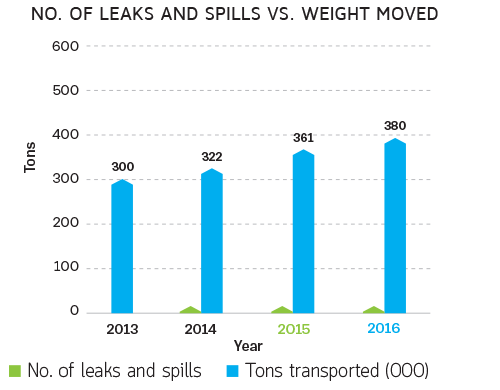
Leaks and spills are among the environmental risks we contemplate in our operational risk matrix. To that end we have the infrastructure and equipment necessary for containment in the case of storage and transport of liquids as well as the very specific emergency protocols and procedures for each case.
Results:
The most severe events of this kind were:
In all cases, the spills took place within the primary containment areas of the product handling zones, meaning on concrete paving with protective trenches.
The material was collected and disposed of according to our procedure for handling hazardous waste.
In proportion to the total volume of materials moved, in kilos, the spills amounted to 0.00002%
In our investigation of these spills, we identified the need for training our forklift operators, and we proceeded to include such additional instruction to on top of what was already contemplated in our annual training plan.
Concerning the spill generated by the accident in the recovery plant in San Luis Potosí, the analysis of the event identified: