
At Pochteca we are concerned about the environmental problems facing our planet. As a result, we work day to day to mitigate the risks that our operations might pose while also looking for preventative measures.
Our work is aligned with both national and international environmental protection standards. This is why our operations are conducted in accordance with necessary regulations. These obligations are considered part of the controls, monitoring and reports included in our Integrated Management System nationwide.
Our facilities are located in industrial parks where land is zoned for the commercial activity we engage in, and in none of them, conditions have been established for biodiversity conservation.
Furthermore, our Environmental Risk Assessments (ERA), spell out the types of flora and fauna that could be affect in the event of a contingency. However, based on recommendations from
Pochteca’s Accident Prevention Program (APP), operational and infrastructural controls are established, in cases where harm to biodiversity could be generated.
As a precautionary measure, we maintain environmental liability and risk insurance coverage to cover for anywhere between US 1.5 to 3 million in environmental damages.
The solvent recovery process requires the use of deionised water in the distillation process. For this purpose we have at our disposal five units that require 300 liters of water per unit. It has not been necessary to reload them since we deployed the first such equipment in 2014 as each unit has a vapor recovery system that re-condenses the water used and maintains the required levels without the need to refill them.
We also use a cooling tower to service the five units. The tower requires 700 liters of water, and since the tower was put into operation it has not been necessary to refill its container.
So far we have had no need for our own water harvesting system. The water supply for all of our facilities except that of Cancun comes from municipal waterlines or from the purchase of tanker truckloads of water. Only the Cancun facility has its own well because it only uses that resource for its sanitation needs. Year over year, we are within the level of water consumption authorized by Mexico’s National Water Commission (CONAGUA).
The residual water that we generate derives exclusively from sanitation services except for one plant whose drum washing operations demands a water treatment plant, for which we conduct annual studies to assume that the discharge parameters are in keeping with applicable regulatory standards.

By washing the metal drums in our San Jose and Minatitlan plants, we were able to reuse 89% of them at an effective rate of 4.49 turns per drum. Previously used wood pallets, are purchased and reconditioned locally as part of our commitment to reuse materials. The effective rate of re-use was 78%.
Because of the nature of the products we sell, the only containers that are recoverable are drums and jugs. For these, we have a special recovery process for washing them on the premises -when this process is enabled- or we outsource the washing process to suppliers who have the necessary facilities.
In relation to 2015, we achieved the following energy reductions:
| Aspect | 2016 Results |
|---|---|
| Diesel | 5% savings from the substitution of 21 transportation units. Improvement in the logistics process, compliance with prevention maintenance programs. Adoption of the freight tool in SAP |
| Gasoline | 15% savings by card use per unit with mileage control. Compliance with prevention maintenance. |
| Electricity | 7% decrease in consumption through operations optimization. |
| Water | Slight decrease of 1% because the expense of this resource does not depend on the operation but on the use of general services. |
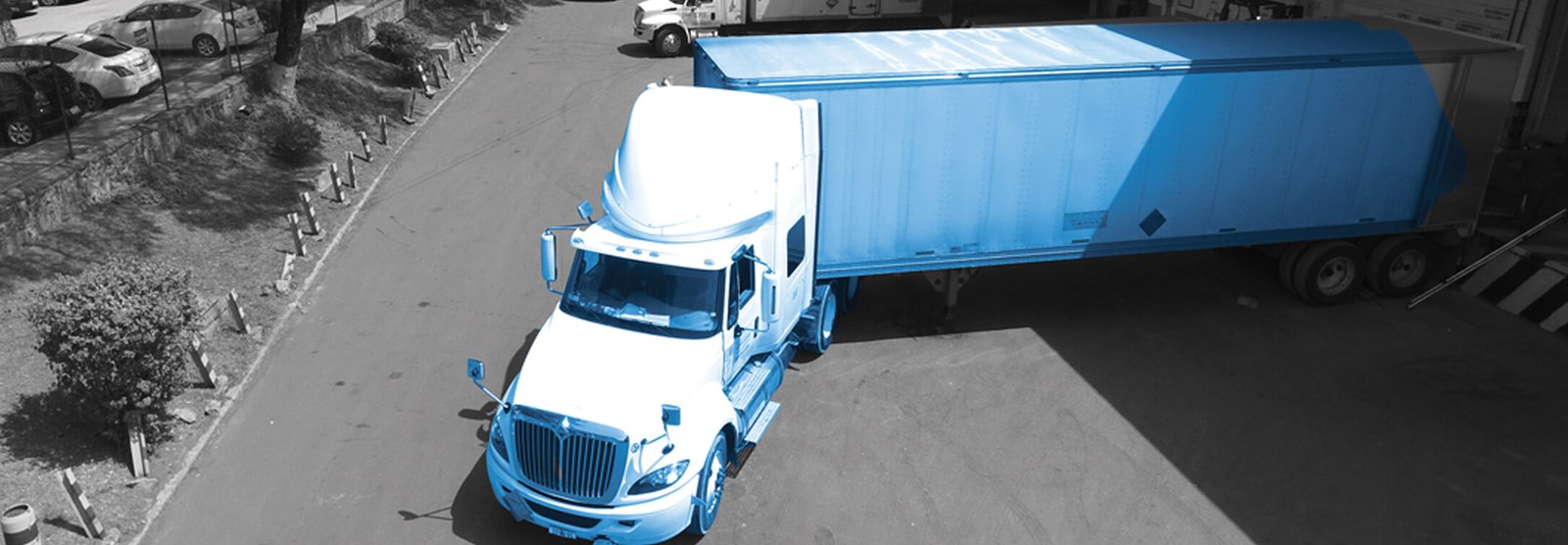
For the first time we made an estimate of the CO2 emissions generated by our processes. This calculation was limited to our consumption of electricity, gasoline and diesel, as well as mobile sources as our process consists exclusively of storage and distribution, so emissions are generated by transportation units and not by processing equipment, which is to say fixed sources.
Result: We calculate that 714 Ton of CO2 was generated in 2016.
To arrive at these values, we employed the emissions calculator of the National Emissions Registry (RENE) published by Mexico’s Ministry of the Environment and Natural Resources (SEMARNAT). Through these calculations, we were able to observe that the emissions level of our operations remain well below the limit established by the authorities for mandatory presentation of an Annual Operating License for producers of atmospheric emissions.
Because we do not have any industrial processes in which heating, refrigeration or steam are required, there is no need for the calculation of indirect greenhouse gas emissions.
Result: The SEMARNAT limit is 25,000 annual Tons of CO2, our reading was 1,054 Tons
Result: The generation of CO2 from direct electrical energy sources was 437 Tons.
We have 93 company cars assigned to executives and sales representative, and 62 transportation vehicles. To guarantee proper operation and compliance with the applicable environmental regulations, we keep service records on all our vehicles and have a policy on switching out vehicles after a certain period of use or mileage; we also assign gasoline cards to control consumption.
These efforts include:
In 2016, we acquired 29 Nitro-Strike Fire Suppression Systems, which are able to put out any kind of chemical fire in less than 5 minutes. The system extinguishes any trace of hazardous residue and prevents fires from restarting. This equipment was installed in 14 sites susceptible to fire hazard.
